24
Jan 09

Metanomics Monday: Teens in Virtual Worlds


Fleep on a previous episode of Metanomics

This coming Monday, January 26th, the weekly Metanomics show will feature a topic of interest to educators.

Kids Building Digital Bridges
Metanomics, Monday, January 26, Noon to 1 Pacific Time

Virtual worlds transport young people outside their neighborhoods and offer them chances for creative collaboration across physical, generational and cultural boundaries. Metanomics host Robert Bloomfield investigates the novel ways that kids use virtual worlds to break down barriers with Barry Joseph of Global Kids and David Klevan of the United State Holocaust Memorial Museum. On the Spot, Daniel Voyager discusses the future of Teen Second Life, fresh from his graduation to the main grid, and educator Chris Collins provides closing commentary.

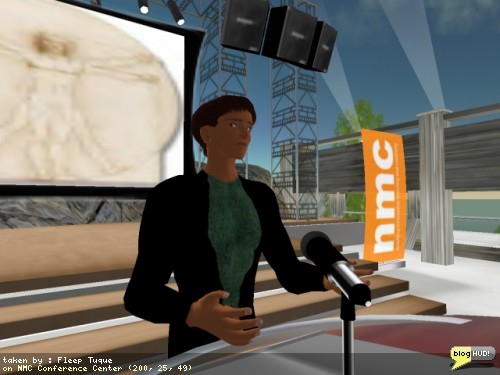
(Hey, Chris Collins, that’s me! Come hear me get on a soapbox!)

See the Metanomics website for more information, watch in-world or on the web!


10
Jan 09

2008: The Year of Limits

I started writing this post in 2008 but didn’t get it finished before the year ended, even with the extra second. In light of the subject, perhaps that is quite apropos.

Like most of you, I’ve been reading all of the end-of-year retrospectives and predictions posts, and scrolling through the “year in photos” or video clips or whatever, caught up in refreshing my memory about just how many things happened in 2008. Wars, elections, economic meltdowns, media shifts, massive natural and man-made disasters, and that’s not even including all my personal stuff. It was a crazy year no matter how you slice it!

And though it is.. overwhelming to absorb this barrage of our collective memories on the net, I do think there’s value to the tradition of reflecting on the year just past and the year ahead. If it’s honest reflection, and you or someone else learns from it, then there can never be too much of it so I refuse to apologize for the length of this post. =)

2008: The Year of Limits

In reflecting on 2008, my experience was one of recognizing “limits”. Some of them are absolute limits, but some of them are just current limitations that I know will change in the future. Some of them are artificial limits, too, and those seem to deserve special attention since it’s easy to make bad choices if you’re working with falsehoods.

The list below describes some of the limits I ran into in 2008…

1. The limits of American-style “free-market” capitalism

Wall Street I won’t belabor the point, we’ve all heard plenty of analysis and finger-pointing, but I will repeat the headline from my initial blog post at the beginning of the end of the beginning of the crisis:

Privatizing Gains, Socializing Losses

On the days when I feel most pessimistic, I think the TARP bailout is nothing more than a wholesale absconsion of our national treasury with perhaps more on the way. So far at least, the US government seems to be much more concerned about the troubles of our corporate citizens than the troubles of our human citizens. On my optimistic days.. I have the teensiest bit of hope that _someone_ _somewhere_ will have the will and the power to do what’s best for the people, not just what’s best for the corporations.

The economic problems have limited the options for many people I know – friends and relatives laid off, retirement nest eggs shrunk to nothing, people unable to sell or buy houses and get on with life. On a personal level, I haven’t felt this economically pinched in a long time. My modest university salary isn’t keeping up with the rate of change very well and in 2008 I began to really hit the limit of my budget in ways that cause me to question what I’m doing, how I’m doing it, and how much I can scale back.

Of course, many people are in tight situations right now, that’s why they call it a recession! But it’s what choices you make when you start to hit those limits that define who you are as a person and as a people.  The government (of the people, by the people, for the people) has choices, too. I guess we’ll see in 2009 what choices we all make in light of these new limits and I hope for all of our sakes that they turn out to be good choices.

2. The limits of American racism

Change

Of all the limits on my list, this one felt really good to bump up against. I can’t say how immensely proud I am of my country for the results of the 2008 presidential election. I am relieved to know that the president-elect’s middle name is Hussein and his last name sounds like Osama, and he’s black, and spent some time living in a Muslim country, and grew up in a non “2 parent/2.1 kids” houseshold, and that none of these things kept him from being elected. Not that racism has ended by any means, but this was an example of its limits and it really does give me hope.

On the personal side, my 74 year old grandpa who still refers to people as “colored” from time to time, and who has been a staunch Republican voter all of his life, actually voted for a black Democrat. Yes Virginia, hell really did freeze over! I can’t take 100% credit for this change of course, but we had a lot of downright difficult and uncomfortable conversations about race, so this year’s election felt like a personal victory as much as a national milestone.

3. The limits of the American educational system and limits to learning online
It’s possible I am living in a concrete-reinforced, super-duper-thick, no-sound-enters-or-escapes echo chamber, but it seems that everywhere I turn, everyone from _everyone_ is convinced that the American educational system is in desperate need of a massive, major overhaul. In my own neck of the woods, Ohio is in the process of implementing a state-wide university system, several education related organizations that are funded by the state are being abolished or merged, and a couple of universities including my own are switching from quarter systems to semesters (not as simple as it may sound and more expensive than you might think).

So change is happening already in a pretty big way, but I’m not sure how much these changes will address some of the underlying problems. One of which, I am convinced, is a staggering lack of understanding about the power of current IT/web/net based technologies. There is increasing curiosity at all levels – thank goodness or I wouldn’t have a job! But from administrators to faculty to staff, I’m perpetually shocked by how little others use the web even for basic things,like as a reference system. Everyone now uses email, of course, and LMS adoption has increased tremendously in both breadth and depth of use, and the core university business and billing systems are state of the art, but the social media/personal empowerment side of the web doesn’t seem to have penetrated academia very much yet at all. You might be surprised how many faculty don’t know about using quotes in google searching, for example, or who don’t read the blogs of their peers from other institutions.

I find that pretty distressing for a lot of different reasons, not least of which because this lack of understanding really limits my choices as a student (or potential customer, if you prefer).
The first problem is that the thing I want to study not only doesn’t have its own discipline or recognized curriculum, most people aren’t even aware it exists! My area of study is the metaverse and I spend far more time trying to demonstrate that it is “real” (ie has real impact) and justifying why we should be studying it than anything else. What time I do get to spend on actual research doesn’t count towards tenure, and unfortunately, most of my output is in blog posts and wikis and PDFs and Second Life builds, and none of these things will get me a degree either. They aren’t “accredited” kinds of output.

The second problem is that even if I could find a good fit in a program, then what? Will I be able to bear sitting in a classroom with a bad teacher who regurgitates the text book and wants me to regurgitate it too? Will I be able to keep my trap shut when we all hand in our papers to the prof and learn nothing from each other instead of sharing them so we all learn more?
When I think of it, I tend to tell myself and others that I can’t find the time or money to go back to grad school right now (artifical limit, I’m sure I COULD if I were willing to radically alter my life), but the truth is something different: I can’t bear the thought of fitting my learning style back into that crummy old model when I’ve found something 1000000 times better – the entire web is my school, my laboratory, and my teacher. I would guess that in 2008 I read more reports, white papers, and peer-reviewed journal articles (and thousands of blog posts and news articles), attended more lectures by more world-class thinkers and teachers (and talked to them, individually!), and had more hands-on, active and engaging learning experiences than I have ever had in any other year of my entire life – in school or out. I also spent a heck of a lot of time reflecting on what I learned, sharing it with others, collaborating on shared learning experiences, and had a few pretty nice milestone publications of my own.

Everywhere I look, I’m butting up against limits. Limits of the existing system, limits to people’s understanding about what it is I want to study, limits in program and curriculum choices, personal limitations (financial, practical, selfishly wanting to learn MY way instead of THEIR way)..

Furthermore, despite the free and wonderful education I received from the intarnets this year, I also learned that there are limits here too. There are limits to how much information I can process, how many connections I can form, and how many channels of communication I can keep up with. There are absolutely, most definitely limits to how many emails I can process in a day. There are limits to how much I can learn on my own unaided by others. I often have questions, need help, need guidance, need mentoring, need direction. I know without a doubt my work and output would improve if I had a better foundational understanding of both the technology that makes the metaverse possible and the research that already exists about human behavior in online environments. I don’t for a second believe I can “master” this material all on my own, even with the tremendous resources the web offers.
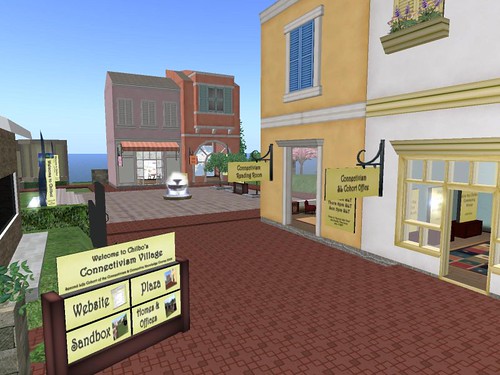
And of all my learning experiences online this year, I’m perhaps most grateful for my experience with the Connectivism & Connective Knowledge MOOC (Massively Open Online Course), because it _broke_ some (artificial) limits in my understanding about what a “class” is and could be, reinforced some limits I was aware of (how much info/connections/channels I could keep up with), and gave an example of how universities might overcome limits in how many students they reach.

Without a doubt, these limits are frustrating, but not altogether discouraging. It just means there’s much work to be done, and I sincerely hope decision makers at the institutional level are paying attention to technology, but at the same time, I also hope that those of us using and evangelizing technology are being honest about its limits even as we explore its promises.

And speaking of technology evangelism…

4. The limits of personal evangelism
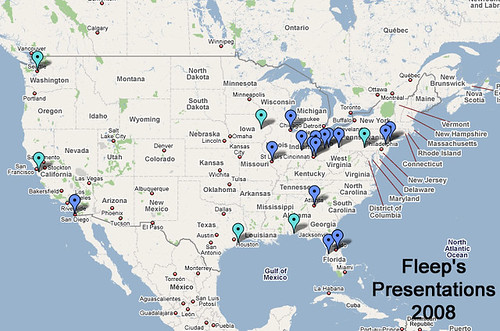
My suitcases are tattered from so many cross-country flights here there and everywhere talking about Second Life, Web 2.0, and the emerging metaverse. I gave talks at conferences and workshops and lunches, to teachers, professors, administrators, instructional designers, businesses, entrepreneurs, laywers, government employees.. so many different sectors of society. What I’ve taken from all my days on the road is that there’s a real lack of perceived value and ROI. 1) People need to see more evidence that this technology is useful for accomplishing their goals before they will be willing to invest the time and resources it takes to get to successful implementation. 2) The technology itself must become cheaper and easier to use.

This is not revolutionary news, I know. But I’m reminding myself because as I mentioned above, I genuinely hope to do more research into those areas so that the next time I spend all day flying across the country just to give a two hour talk, I feel like it was really and truly worth the trip for me and the audience and the university that paid for me to do it.

I guess this means my “zealot phase” (and hopefully “self-righteous jerk phase”) is over for the moment. That isn’t to say that I’ve given up, but rather that I’ve learned the limits of what I, Fleep can do alone. I need to start leveraging my networks better and work in collaboration with more people instead of running myself ragged trying to do too much alone.

5. Limits of the Second Life platform and our current Metaverse

Of course, the job of evangelizing would be a lot easier if the thing itself were easier. Alas, we face some tough issues. The metaverse as a concept is mind-boggling for many, the best iteration of it at the moment (Second Life) is hard to use and has serious limitations, and everything else out on the horizon is still in alpha/beta phase.

I really can’t stress enough what an obstacle our current lack of.. vocabulary is. What is a virtual world? What is the metaverse? What the heck is Castranova talking about with all this synthetic stuff?

Earlier this year when I was struggling with the Looking to the Future: Higher Education in the Metaverse piece, the hardest part was explaining what the metaverse currently IS, nevermind what it might be in the future. Here’s what I wrote:

In its current context, the metaverse is a complex concept. For the purposes of this article, the definition in the Metaverse Roadmap will suffice: “In recent years, the term has grown beyond Stephenson’s 1992 vision of an immersive 3D virtual world, to include aspects of the physical world objects, actors, interfaces, and networks that construct and interact with virtual environments. . . . The Metaverse is the convergence of 1) virtually-enhanced physical reality and 2) physically persistent virtual space. It is a fusion of both, while allowing users to experience it as either.”

In short, we can imagine multiple and myriad digital mirrors of the real world existing alongside multiple and myriad digital worlds that do not represent the real world, all used for a variety of purposes, tied into a variety of communication methods, and populated by any user with Internet access, as well as a steady stream of data originating from objects and devices in the real world.

That’s awful! A mouthful of confusing stuff and I feel very disappointed in myself that I couldn’t find a better way to communicate it. That’s a limitation I (we) must break through in the coming years.

Beyond the limits of our terminology, there are serious limits with existing platform(s) that can’t be ignored either. I still believe that anyone interested in the metaverse must be in or at least paying attention to Second Life – Linden Lab’s platform and the OpenSim derivatives are the most promising metaverse project on the horizon, and perhaps more importantly, the people using, working, and playing in Second Life simply _are_ the vanguard.
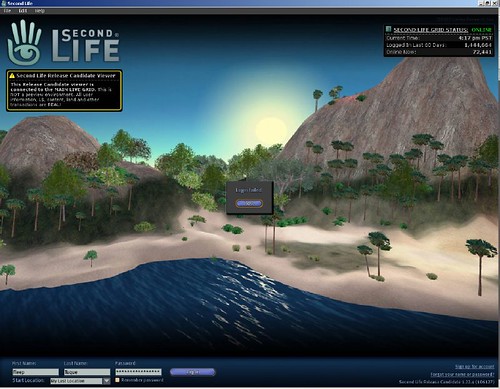
But Linden Lab’s Second Life, and the alpha-stage OpenSim grids, are still extremely limited in their enterprise use. Whether the intention is to use it as a social or collaboration space, or as a modeling and prototyping space, or to explore the new frontiers of music and art made possible in these worlds – the platforms need a LOT of work across the board, from the GUI to reliability to providing access to other digital content. Sadly, after 5 years of being out of beta, Second Life’s group IMs still don’t work reliably.  I can’t show a flash or .wmv movie in Second Life, can’t collaboratively access webpages and documents with others easily, and it takes forever and 50 steps to do something as simple as making a prim clickable to launch a webpage.

And those are the simplest technical limitations that need to be overcome. That’s not even getting into the wet, squishy world of legal, philosophical, and social questions: content creator rights, intellectual properly, who has jurisdiction, who governs these spaces, code as law, what’s happening with all of the data we generate from “living” in these spaces and how can we protect ourselves from its misuse, what are the social implications for communities moving to the metaverse, and on and on and on..

In other words, we have a LOT of work to do.

6. The limits of Will Wright

Yes, I’m sorry, this one gets a whole bullet point of its own. Do you have ANY IDEA how long I waited, and with how much _anticipation_ I waited for the release of Spore? (Many many years, and a lot, respectively.)

Others have done a much better job than I in analyzing just why it was such a rotten egg, but I think that might be my biggest (most trivial) disappointment of the year.   I don’t know where it all went so wrong, Will, but dude, you really let us down.

(Sorry, needed a little levity before tackling #7..)

7. The limits of life itself

In late 2007, we learned that my Dad (grandpa, actually, but my dad in all other ways)  had stage-4 metastatic lung cancer that had already spread to his adrenal glands. By mid-2008, it had spread to his spine.  Helping to take care of him through this battle with cancer has been excruciating and it affected every single day of the year for me.
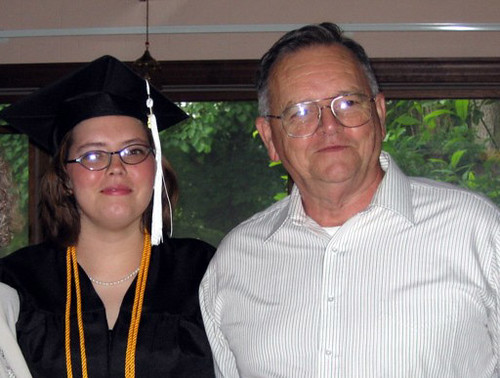
I know that death is a part of life. I know that death is inevitable. I know that I am neither the first nor the last person to lose a parent or to lose a loved one to cancer. I know that some day I will die. I know all of these things, but I’ve never _felt_ them until now.  In my heart, I know it’s a minor miracle that he’s survived more than a year past the initial diagnosis, and it’s a gift that we’ve had all this time to say goodbye, share memories, and adjust to the hard reality. But it has also irrevocably changed my sense of time. I see the limits it imposes on us all in the starkest of terms now.

This experience has also made me wonder how on earth people without families or support networks manage in the face of serious illness (something we’re all bound to face) because without a doubt, I have finally seen the limits of the American health-care system up close and personal.

Wow, what a wreck. I don’t even know where to begin. The absurdities of insurance claims and Medicare, Part-D and doughnut holes, hospital staff that don’t even put on clean gloves unless you ask them too, different doctors with different charts and lab results and patient information systems that don’t talk to each other, medication regimens that require a PhD and 50 gazillion bottles, refills, and dosages to keep up with, doctors prescribing medications that conflict with pre-existing orders… the list goes on and on and on and on. It’s insane. INSANE.

Our family care-team is made up of four intelligent, literate, capable people and we can’t really keep track of it all. The hoops are simply ridiculous, the cracks in the system are more like black holes, and for all the mistakes or near-mistakes we’ve caught, I fear to think of all the ones we didn’t. And I would be remiss if I didn’t mention my deep bitterness that the _only_ part of the American health-care system that appears to be using IT efficiently is the damned billing systems. Sharing information about the patient to improve care? That’s a spaghetti mess, but they can sure share information about how much it all costs!

Perhaps my viewing the year 2008 from this prism of limitations is all the result of Dad’s cancer; maybe it’s colored my view so much that limits are all I see at the moment. But I don’t really think so. When I look at what’s happening in a broader context, I see that the American economic, education, and health care systems aren’t the only large-scale systems and institutions that appear to be feeling the strain.
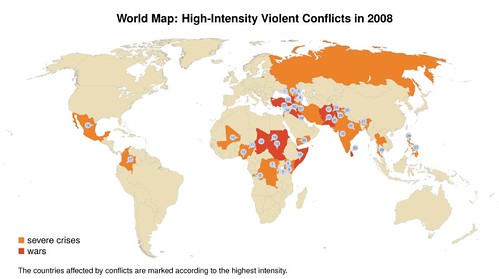
For one, the financial/economic crisis is definitely a global one. It’s not an indivual experience, or a national experience, it’s a global one. Even those who haven’t felt the pinch yet have certainly felt the fear.

For another, I believe wars and violence result when political systems fail. Mumbai. Iraq, Afghanistan, Pakistan, Sudan, Palestine, Georgia, and many more places besides, deaths caused by people killing other people, caused by the limits of our existing political institutions.

Human activity in combination with completely “natural” weather and geological phenomena are rapidly, and I mean RAPIDLY changing our environment. The very finite resources of the planet and the real consequences of natural disasters are absolute limits that we simply can’t afford to ignore. The earthquake in Sichuan, China killed almost 70,000 people. The Nargis cyclone in Myanmar killed almost 135,000 people. Predictions seem to indicate that more trouble is on the way, and for the most part, our individual, national, and global responses to these challenges have seem limited by disorganization, misinformation, and a terrible refusal to plan for the reality we all know is coming. It’s absurd. And frightening.

I should probably stop there, this post already turned into something of a monster and I could go on in this vein for quite a while. But the lingering question I have at the end of all this reflection is this:

Have we reached the limits of our patience with behaviors and systems that just plain don’t work anymore?

I sure hope so, because the upside, the real benefit to recognizing these limits, is the ability to leap into the paradigm-shift – and leap we must.

The parameters aren’t what you thought they were.

The rules of the game are changing.

The world of the 21st century is different than the world of the 20th.

The sooner we come to terms with it, the sooner we can start dealing with it. These limits – even the artificial ones – really need to, can, and must be addressed.

I don’t know if I’m up for all the challenges I see looming in the days ahead, with my work, my personal circumstances, with Dad’s cancer. I don’t know how to best prepare, either, but if I’m sure of anything after 2008, it’s that I don’t have a choice about it anymore. The changes are already coming too thick and too fast to ignore, best get with it, buckle down, and get ready.

(And 10 days after the new year, I finally get this posted.  Hooray.)

Continue reading →


05
Jan 09

A Wii for Christmas

It’s funny, my first reaction to this video was to turn down the volume (man these kids have a set of pipes!) and then to laugh at the sheer joy of it. I remember when Christmas felt like that! I don’t know if I got THAT excited over my first Cabbage Patch Doll, the must-have toy when I was of an age to believe in Santa, but probably pretty close.

My second thought was.. what is it about the Wii that makes them scream, cry, faint, and roll around – literally – in ecstatic joy? Is it just the Must Have gift of the year? Is it the technology? Is it how much fun it is to play with others?

Not sure, but talk about extreme emotion!


23
Dec 08

Seasons Greetings!

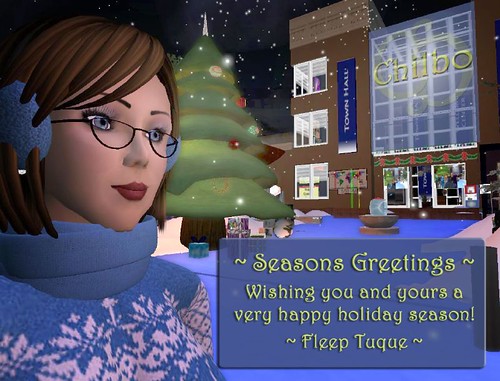
Happy Holidays Card from Fleep!  (2008)

Wishing everyone a happy holiday season and a restful, relaxing time with family. (And with all apologies to my Second Life friends, the card wasn’t supposed to spew snow, really!) =)

Merry Winter Holiday Hanukka Christmas Solstice And Everything In Between!


15
Dec 08

Public Twitter Station in Second Life: The “Presence” Problem

Concepts like “place” and “presence” can get really mushed up when you’re working in the metaverse. I’ve been puzzling about these concepts so intently over the last couple of weeks that I was actually motivated to do some (*gasp*) scripting to see if I could mediate that “sense of presence” in Second Life. Let me explain.

The Presence Problem

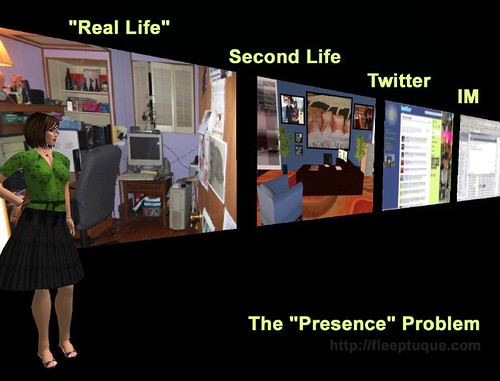
Right now I am sitting at my desk in my office at home physically, and at least nominally I’m also sitting at my desk in the Chilbo Town Hall virtually (which is where I park my avatar to let people know I’m probably off in another window instead of paying attention at that moment), AND I’m also “on” Twitter and IM. So, if you wanted to get in touch with me for a synchronous conversation or “visit” with me, you could come to my house in Cincinnati and ring the doorbell, but a) that would probably freak me out unless you’re a really good friend and b) being an internet peep, you’re more likely to send me an @fleep or DM on Twitter, or if we’re good friends you’ll poke me on Gtalk or AIM or send me an SMS on my cell, or if you’re a Second Life resident, you’ll log in and look for me in the Town Hall.

So many places I’m in at once, and that’s just trying to keep things simple – we’re not even including all the asynchronous options. But if you asked me “Where are you right now?” the answer I’m likely to give depends on context – if you called me on the telephone or sent me an SMS I’d say I was at home, but if you IMd me the same question in Second Life, I’d say I was in Chilbo, and if you asked me on Gtalk or AIM or Twitter, I don’t even know which way I’d answer. BUT, the truth is, I’m am in all those places and locations and “mental spaces” simultaneously – and yet it’s not REALLY simultaneous because my attention can only be focused on one “space” at a time.. Or is that really true?

And forget about me for a moment, “where” are all my friends right now? What are they up to and if I have a question or want to visit with them, “where” do I go to find them? With so many options and each relationship/friend connected to me in different ways through different media (some are on Twitter, some aren’t; some are in Second Life, some aren’t, etc.) it gets to be quite complicated not only figuring out where _I_ “am” but also where my friends “are” too.

This is probably a round-about way of approaching this issue, but that’s how the question/problem presented itself to me a few weeks ago when I was crunching numbers from the Chilbo Community census data and saw many comments that Chilbo often felt “empty” and that the residents of Chilbo didn’t know as many other residents as they’d like. I was a bit surprised by that finding, since the traffic reports show Chilbo gets pretty steady traffic, between 700-900 visitors per week, and because I am connected to so many Chilbo folks on so many different platforms, Chilbo rarely feels “empty” to me because even if a Chilbo resident’s avatar isn’t in the sim at that particular moment – I still “hear” what they are up to on Twitter and can still contact them any time through Second Life IM or Gtalk or wherever. I have a sense of where people are from all these other tools and that tenuous connection is enough to convey their “presence” to me that it doesn’t matter that they are not physically in the room with me or virtually in the sim with me. But are others having that experience?

If you’re not on Twitter or other web places, does Chilbo seem even more “empty” or disconnected than if you are? And could that be mediated with some way to “blend” these spaces?

Shopping at Ordinal Enterprises

That was my question. And so I embarked on trying to modify Ordinal Malaprop‘s fantastic TwitterBox script to see if I could attempt to blend two different “spaces” together – the virtual location of the Chilbo sim and the .. “mental space” of Twitter (and if you use Twitter and SMS on cell phones, you know Twitter can be used on the go just about anywhere you are physically).

Now I should note, despite taking a programming class (I got a B+ and was thrilled), I remain stubbornly obtuse when it comes to understanding all of the logic involved in scripting. The lines of code, the variables, the repetition, the test-fail-test-fail all to no avail.. I find it incredibly frustrating. And, it turns out that in my ignorance, I attempted to modify the wrong script – instead of working on the basic one Ordinal gave me, I began with the more complicated one, so this probably took me many many many hours longer than it should have, and I was determined to try to figure it out myself and not bug one of my coder friends to help me, so it was an even longer time before I realized I’d taken the hard path. Doh. However, I am very pleased to report that THIS “Fleep Tries to Program” story has a happy ending! I eventually had to ask for help, but I learned much more about the Linden Scripting Language than I probably have in ages, and I have a working prototype going in-world, so I think all the torture and 3AM nights was worth it.

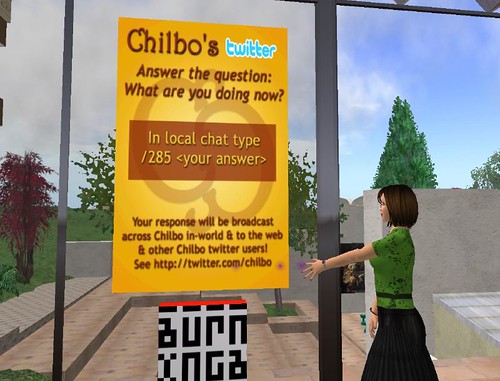
Chilbo Public Twitter Station - Instructions Poster

So what does this thing do? Considering all the effort it took, it sadly does not do your dishes or laundry. What it does do is a) imports tweets from the Chilbo Twitter account and all the people that account “follows” and reports them back out into the Chilbo sim in Second Life by printing the line in local chat and b) allows anyone in the Chilbo sim and within local chat range to send a tweet OUT of Second Life to the web world (through the Chilbo account).

So, if you’re walking down the street in Chilbo and happen to be near a Twitter station, you might hear a little birdie tweeting sound and see text appear on your screen that says “fleep: I’m waiting in line at the grocery store” and a few steps further down the road one that says “malburns: I’m visiting this cool sim in Second Life” or whatever our tweets might say. If you know Fleep and you know Malburns, even if they are not there in Chilbo with you, might you feel that Chilbo is less empty if you have some sense of what Chilbo people are up to at any given moment? Does it change your sense of presence if in some ways Second Life and Twitter are blended together so that your attention does not have to be focused on one OR the other, but can engage with people in both spaces at the same time?

Chilbo Public Twitter Stations disguised as birdbaths..

Will it change the sense of “community” and “connectedness” the residents of Chilbo feel with each other if they can send and see communications to and from Second Life even without being logged into Second Life, or for that matter, even if they don’t have personal Twitter accounts?

I don’t know, but that’s what I’ve been working on lately. I guess we’ll see how it works out. I’m still tinkering with the script, but if you’d like a copy in progress just let me know..


21
Nov 08

CCK08 – Off The Wagon, But Not Off My Mind

CCK08 Bandwagon goes on without me

Between the crazy workload for Fall Quarter, being out of town for conferences, and a bout with the Martian Death Flu, I confess to having fallen completely off the CCK08 and CCK08SL bandwagon. I didn’t just fall off, I think it ran me over on its way out of town. =)

Today is the first day in I can’t recall how long that I’ve had a moment to just sit down and think about CCK08 – and how woefully sad I am that I’ve ended up missing most of it. The first few weeks were a little overwhelming, but also very exciting, and the conversations we had at the synchronous meetings in Second Life were some of the best.. deep thinking I think I’ve ever truly done about “education” as a knowledge domain – what does it mean to “learn” something? What ways do we “learn”? How do we know when something is “known”? How do we “learn” best? Through the materials and readings in the course, the discussions and videos and podcasts, and the dialogue with colleagues and facilitators, I really enjoyed the experience.

Then life got in the way and the CCK08 bandwagon rolled on without me.

But it didn’t leave before leaving me with lots of interesting concepts, thoughts, conversations, and resources to think about and revisit. In spare moments making the rounds to check for litter in the Connectivism Village in Chilbo, I’ve stopped into the reading room and clicked the little TV screens or radios to listen to a recording of a session I didn’t get to attend. Or when triaging my ever-overflowing email, I take a second to scan The Daily newsletter to get a sense of what the wagon is talking about now.

And thinking about it, I really.. appreciate and admire the work and effort that has gone into this experiment. Even when my life is so truly busy that I don’t know which end is up, I am still “connected”. The technology implemented purposefully, in addition to the technology used and resources created ad hoc by the various participants, really enables you to “hook in” to this network in a multitude of different ways so that even when you aren’t paying attention – the currency of the web – you still are connected to these people, media, places, conversations, and readings. You have access to subject matter experts, a cohort to discuss and work with, and wide-ranging library of resources created by not just the instructors, but the participants themselves. You have peer review and feedback built into the system – every single time I contributed to CCK08 in any way, I _always_ got a response from another person – someone friending me back, or following me on Twitter, or leaving a comment on my blog, or responding to an email or question. I certainly did a lot of _CONNECTING_ when taking this class.

But I’ve been thinking it’s a real shame that I had such a hard time managing all of my other responsibilities and couldn’t fully participate, because it seems like under normal circumstances, this would be an almost perfect learning environment for me. When I did have the time, I wasn’t just “engaged” in that clinical sense (the “engagement” buzzword is starting to wear on me), I was really _into it_. It felt like learning, but it was _fun_. It was interesting, and thought provoking, and though I don’t know how much I “learned” if I had to take some standardized test about the course material, I can tell you I learned a heck of a lot.

CCK08 discussion in the Connectivism Reading Room

And in realizing that 1) I’m still connected to the people I formed bonds with in the beginning of the course (I’m imagining the lines between the boxes on my social network graph, and realizing that it wouldn’t work to model those lines with, say, thickness as an indicator of the strength of the bond, because in reality, the bond is mutable – at times I have weaker ties with nodes in my network, and when they become relevant, or needed, or reach out to me in some say, those ties become stronger – so the “lines” should be modeled more like energy flowing, with ebbs and tides), 2) I still have access to all of the archives, media, and readings from the course, and 3) I actually learned a tremendous amount of skills, information, concepts, technical tools, and other people in an extremely short period of time…

I’ve come to the conclusion that I’m not so ashamed to have fallen off the wagon, after all, because the metaphor of the wagon is all wrong.

It’s really puzzling to take a course about the course, that is to say, learning about connectivism and connective knowledge by putting into practice the theory of connectivism and connective knowledge. I can’t separate out in my mind which of my .. reactions, for want of a better word, are related to the course material – the theory – and which are related to the experience of taking the course – the implementation. I think for the moment I’ve given up worrying about it. In the end, I realized that I’d been thinking of this “course” as a “course”. And when I could no longer participate in the “class”, then it felt as if I’d dropped out, and the group traveled on without me. But I think what this class taught me most of all, is that my concept of what makes a “course” completely clouded my thinking about the experience. I don’t think I failed the course, nor do I think the course failed me. This was a voluntary effort, and when I had the spare brain cycles to attend to it, I learned one heckuva lot.

So now, all these weeks later, I’m finally getting around to writing my first paper about/for the course, even if the synchronous component of it is nearly over. And I hope that all the plethora of resources that people created will remain for as long as they can, so if others fell off the wagon, or want to refer back to them as they continue on with their learning, they will be available to everyone who comes after. I thank @arieliondotcom for bringing this to my attention.

CCK08 - Building in the sandbox

I did fail, however, in fulfilling my role as a _facilitator_ of the Second Life cohort, and I DO feel guilty about that. I apologize to all those who showed an interest in exploring how learning about Connectivism might be enhanced by using a virtual world. I did my best to provide the space, the tools, the initiative, the original organizing force to help make it happen, but I didn’t have the time to really _facilitate_ its use. I’m not sure what – other than time and personal attention – I could have done to improve making the tools available to whoever wanted to participate. If anyone has suggestions, I’m all ears. Here is what I did try:

– I created a web form so that anyone with an interest in exploring the SL cohort could sign up

– I created a central information page about the SL cohort, on a wiki, that anyone who requested access got it, and included a few frame work pages to store transcripts, a place to plan activities, and a space to share cohort members’ web links (blogs, twitter, whatever) so we could connect with each other outside of SL.

– I created a CCK08SL Googlegroup and added everyone who signed up on the webform, so we could communicate asynchronously via email with each other

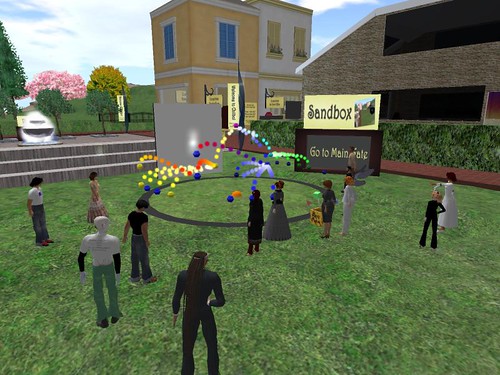
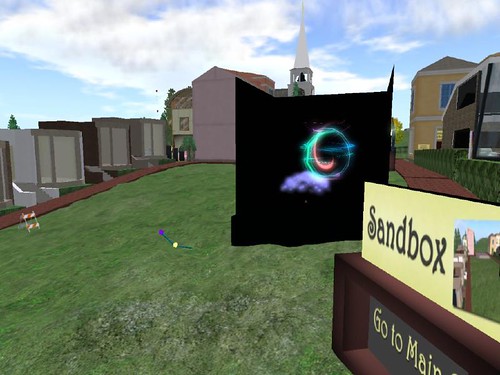
– I created a space in Second Life, with informational rooms linking back out to web resources (to provide a visual component to digital resources), offered anyone new to Second Life a personal home/office space, offered kiosk space for experienced SL participants to share their other work/projects in SL with members of the cohort, and left as large a blank canvass sandbox space for people to play with building/creation as much room as Chilbo could afford to provide (land costs money there too!). I tried to add some “fun” or “interactive” elements like an automated bike tour and visually pleasing spaces to make the SL component as attractive and functional as I could.

CCK08 - Connectivism Village in SL

Here are some stats on the results, as of November 20, 2008:

133 people initially signed up for the Second Life cohort on the web form.

94 of those people responded to the very first email inviting them to join the SL Cohort Googlegroup (email list)

46 people responded to an email and expressed a time preference for synchronous meetings on Doodle

– There were 72 messages posted to the email list (only members could post, 69 web views of the discussion (anyone/public could view)

16 people responded to the invitation to create an account on the wiki to edit it, and 4 people took the time to make any edits (highest rate of participation was those who responded in email or added their blog to the wiki:

SL Cohort Blogs

* BarDil Joyce: Dilip Barad’s Weblog http://dilipbarad.blogspot.com
* Claude Desmoulins An Education and Technology Blog http://connecteded.wordpress.com
* Fleep Tuque: Fleep’s Deep Thoughts – http://fleeptuque.com
* Graham Mills: TidalBlog – http://tidalblog.blogspot.com/
* Sia Vogel: World Wide Wiser – http://siavogel.edublogs.org
* WainBrave Bernal: Technology, Education, & the Future – http://hothousestrategies.com/tefblog/
* Yvonne Anthony: Making Connections http://fass.edublogs.org/

I’ve subscribed to them and thank those who made the effort to share.)

It generated 88 emails, IMs, tweets, or messages from Second Life that I would classify as “support requests” – these were not on one of the lists, they were personal messages to me asking for assistance. (I think I answered all of them, though sometimes not as quickly as I would have liked.)

In Second Life, a total of 808 unique avatars visited the Connectivism Village. These 808 visitors spent a total 14,652 minutes there. (244 hours total, a half an hour per person averaged across all 808 unique visitors, but my intuitive sense from getting a daily traffic report is that about 30 people spent the vast majority of time there, coming back repeatedly week over week. I have the data if anyone is crazy to do more analysis, but it’s in plain text form, a separate text file for each date.)

– The highest number of visitors together at the Connectivism village at the same time, throughout the whole period, was a max of 14 simultaneous avatars.

7 people in the “experienced SL’er” category created a kiosk to share info about their other SL projects.

5 people in the “new to SL” category took advantage of the free home/office and personalized their space.

8 people contributed some kind of object, build, or project in the cohort sandbox.

CCK08 - Sandbox

So. Coming out on the other side of my part in this experience, here are some things I think I’ve learned:

Facilitating a MOOC or even just a small part of one took an enormous investment of time. Ultimately, I couldn’t sustain it at this particular time in my life (crazy busy time at work, very ill family member requiring lots of care, up to my eyeballs in other volunteer projects/efforts). If I had more _time_, however, the mechanisms I used to communicate, get information, and share information, seemed to work pretty darn well for me on my side of the facilitation equation. The googledoc sign up form worked perfectly, the googlegroup invitations were kind of a pain, but once it got going, it worked with no additional tinkering. It is definitely possible to organize larger-scale coordination using free or nearly free web-based tools with a moderate level of tech savvy-ness. It wasn’t the technology implementation that required so much time, but rather the _social_ investment required. I could have increased or sustained more participation, I think, if I had spent more time poking, prodding, emailing, twittering, meeting, asking for help, teaching.

Wikis, in this experience, and with other projects I work on, continue to be one of the hardest tools to get people to use. I don’t know why this is, but people who otherwise sign up, contribute, join.. they really fall off the wiki wagon quickly. Maybe it’s because I don’t know how to facilitate wiki participation, but I must be missing a really big clue bus on this one, cause I’ve tried everything, and participation on wikis (vs blogs, email lists, even SL itself!) is always lowest.

Virtual worlds platforms offer two really key affordances to education – 1) the sense of co-presence that enriches synchronous interactions (the sensation that you are really “there” and the other people you’re with are also really “there” and you are all “there” together) and 2) the ability to model, create, simulate, build, share, and collaborate on projects, environments, symbols, data visualization, and other elements that make up the shared environment. In my judgment, except for in the beginning, and even then by a smaller number of participants than I anticipated (only 14 at the height of it), the Connectivism Cohort in Second Life failed to really leverage either. That isn’t to say that those who did participate didn’t get some value out of it, but out of 133 people who originally signed up, I would guess that maybe 20-some people out of the SL Cohort got _some_ substantial value out of their participation (either talking with other class members, or creating something in the space, or learning more about Second Life/virtual worlds).

We simply didn’t have enough participation with enough skilled SL content creators to really explore the medium together in a substantive way, particularly in how a virtual world platform could be used most effectively for _this specific course_. I imagined people collaboratively building together, modeling things we read about or saw in the course content in a 3D form, exploring how concepts might be best represented in 3D versus text, video, image, or 2D. Except with a few minor exceptions, that just didn’t happen. We were more successful in leveraging affordance #1 – I don’t think I am the only one who came away from our synchronous discussions feeling that it had been a very valuable way to spend my time, and that I learned a lot from them – but these remained very small discussions, usually with between 3 – 6 participants.

CCK08 - Fleep and Arielion discussing the readings

As I said, I think I made some mistakes along the way, in how I framed the cohort, or implemented the various technologies I used. For example, we scheduled the synchronous meetings at several different times to accommodate different time zones, but I think having many different meeting times just diluted the initial momentum and fractured what could have been a stronger, more connected group. Now I’m thinking, if you’re going to commit to the synchronous participation of using a virtual world, then you have to really commit and pick a day and a time and stick with it – unless you have a much larger starting group, more passionate participants, or more people to facilitate the meetings. It seemed like as soon as I stopped being able to make the synchronous meetings, everyone stopped going, even though I had hoped people would just continue on without me, as I’d tried to “crowd source” all the tools needed to do so.

Or perhaps I incorporated _too many_ technologies in trying to empower the crowd. Maybe if I’d just had people sign up for the cohort and then invited them to the group in Second Life and done ALL of the communication through Second Life, maybe more people would have participated… I’m skeptical, though, since SL’s built in communication tools are suboptimal and often don’t work. I dunno.

I’m not entirely sure what all I could or should have done differently, and I do regret “falling off the wagon” – but I don’t regret for one second any of the time I spent on this endeavor. I feel like I got quite a lot out of the experience, and I hope that at least some of what I contributed made the experience better for others taking the class. It was an active, engaging learning experience for me, and I think I will continue to ponder over and learn about connectivism and connective knowledge well into the future, helped by the multitude of resources created by others and shared with me.

So, in conclusion, my thanks to everyone who participated, helped, encouraged, or otherwise took part. My apologies to anyone I let down by not being there enough. I hope this information is helpful to you in some way, even if the rest of it was not. And mega-great thanks to George Siemens and Stephen Downes, who did their own part to encourage me and the SL Cohort, and who gave us all the opportunity to learn together through the Connectivism & Connective Knowledge course. It was one of the singularly most interesting classes I’ve ever taken and I hope I’ll get a pass. =)

Reblog this post [with Zemanta]

12
Nov 08

Superstruct: Inventing the Future – 2019

Screaming 3D Bootstrapper Csven Concord had been pinging me for weeks about the Superstruct game organized by the Institute for the Future. I finally got a few hours to take a look at it and was stopped cold at the very first mission of the game: describe yourself in the year 2019. Not a fantasy you, but you you, where you think you might actually be. It took me three days just to accomplish mission #1 to make my profile.

My efforts to get into the Superstruct mindset were somewhat hampered by the technology being used. Not sure if it’s just my PC or that I’m using the FF3 browser, but I continually have to relog into the site over and over just to navigate around (is it not tracking cookies properly or what?) and the framing they use makes it hard to grab direct links to specific content. With some trial and error, I finally got to Cven’s Screaming 3D Bootstrappers Superstruct page, and managed to add myself to the S3DBers wiki page, and saw a call for help under the heading “Young Farmer’s Outreach”:

Request: “we need 3d VR environments that mimic the reality of a farm/ranch so that our young farmers can share their skills”

So the idea is that it is the year 2019, and five major superthreats are having devastating effects on human populations. To play the game, you create or join Superstructs (groups) to address one or any of these threats by using your unique talents, resources, and perspective to generate ideas, stories, videos, websites, pictures, or anything else that helps us imagine how life would really be in that situation and what solutions might really work to address the problems we face in this fictional reality of 2019.

In my imaginary 2019, the Chilbo Community has grown tremendously into a large, global community in the metaverse. To deal with the Ravenous superthreat – where major disruptions in the global food supply chain threatens the world with starvation and lack of healthy, nutritious food – the Chilbo Community has established a virtual garden to allow farmers and scientists from anywhere in the world to help people learn to grow their own gardens. In this fictional world of 2019, Respiratory Distress Syndrome (ReDS) has also forced many cities and populations into Quarantine, so the Chilbo Community Garden might be especially useful for those stuck in quarantine zones where access to food supplies may be dwindling. By using virtual world technologies to connect people who cannot visit one another in real life, we can spread information about sustainable farming to a larger audience, use the 3D modeling capabilities of virtual worlds to create roleplay scenarios, display equipment and demonstrate techniques, and reach populations who are isolated because of possible contagion.

To flesh out this idea, I worked with some Chilbo residents to actually build out this garden in the Chilbo Nature Preserve in Second Life, and recorded a machinima clip to “report” on our progress in the year 2019. This is only the second machinima I’ve ever made, so pardon the amateur execution.

When I think about the future of education, I wonder why we don’t spend more time doing THIS kind of work. I wonder if we’re teaching students the skills they need to really evaluate information on the web in context. For example, in the process of “playing” this game, I came across the ReDSNet Project website. Now, this website is so well done, so realistic, it would be easy to think ReDSNet was real. How many students would have the skills to read for content AND context and eventually discover that this is a fictional website? How many students would have the creativity or skillset to create a fictional website that was so convincing? How can we use these types of .. roleplay scenarios to build digital literacy skills that really WILL be useful in the year 2019?

I wish I’d had more time to spend on the Superstruct game/concept. It was really a fascinating, thought provoking exercise. And even if the machinima still doesn’t make any sense to anyone but me, I enjoyed the experience, I spent some time seriously thinking about my own future and where I _want_ to be in 11 years, I got an excuse to practice my machinima skills, and I strengthened some bonds in my network, personal and professional. Quite an accomplishment for some crazy collaborative game on the intarnets that I only had a few hours to play.


11
Nov 08

For Veteran’s Day – Report from Draxtor Despres

In honor of Veteran’s Day, Life4u reporter Draxtor Despres produced a story when the Vietnam War Memorial was created in Second Life last year. His piece also discusses the state of the War in Iraq at that time, and it’s interesting to look back and remember how much the Wall memorial touched all of us who experienced it in-world (in Second Life), and what a powerful reminder it was of the actual human cost of the Vietnam War. All the more timely considering our ongoing conflicts around the world.

I recommend that you visit the Wall in world if you can. I think it’s sometimes difficult for those who have not fully immersed into a virtual environment like Second Life to understand the emotional power that these spaces can have. I think, though, if any human emotion is truly universal, it must surely be grief, and the pixelated etchings of thousands of names along a long somber wall is beyond touching, even in virtual form. The seemingly unending list of individual names reminds us that each person on that list was someone’s son or daughter, mother or father.. and the virtual representation of it doesn’t detract from its simple message.

Experiencing it in Second Life was not the same as when I went in-person with my mother and my sister to DC – a rainy day that slicked the memorial and made the surface as reflective as a mirror, so that I saw my own face overlaid with the names of the soldiers on the wall – but it was an equally moving experience. Instead of sharing that collective sense of grief with just my family, in the virtual world I was sharing it with people all over the terra world – who no matter our nations or affiliations or politics – all abhor the cost that war brings.

Thanks to Draxtor for this timely reminder, and to all of those who contributed to the creation of this memorial in Second Life.

Reblog this post [with Zemanta]

24
Oct 08

08A_15COMM429: Video Games Better Than Real Life?

This post is for Prof. Jenning’s Communication & Technology class. If you want to comment, please comment back on the class blog so Prof Jennings sees it! – Fleep


19
Oct 08

Conferences and Projects and Articles – Oh My!

Since the start of school in September, it’s been a whirlwind of activity! Like Dorothy, I’m trying hard to stay on the yellow brick road, but the poor blog suffers when I get too busy. Here’s a quick update though on a number of exciting things..

University of Cincinnati Galapagos Islands Project

Progress continues on the Galapagos Islands project, and I have to give all due credit to my student assistant Ferggo Pickles for his truly excellent work in creating the sculpted animal models! News of our project is spreading and we’ve gotten very kind mentions in EDUCAUSE Review, the Chronicle, and even Virtual World News! Another blogger discussed our work too, but I wasn’t sure if it was positive or negative considering we don’t have any plans for visitors to pull the tails of lizards. =)

Chilbo Community

Incredibly, the Chilbo Community marks its two-year anniversary this month! We held a Chilbo Town Hall Meeting this afternoon, and I managed to complete the 2008 CCBP Annual Land Census and am preparing to distribute the 2008 Resident Census in the next few weeks. A note to any Chilbo residents reading this – you’ll have to complete the survey to keep your house or store in Chilbo, so be sure to read that email when it comes! Aside from all of the professional opportunities I’ve had because of Second Life, I must say Chilbo – the place and the people – is my favorite spot in the Metaverse. Whatever serendipity led me to meet such great people, I’ll never know, but I continue to be grateful that I did.

Connectivism Course

The Connectivism & Connective Knowledge course continues into Week 7, and I have fallen woefully behind on the readings, and even missed the last couple of meetings in Second Life! Still, the Connectivism Village continues to receive a high amount of foot traffic and I keep getting emails that people really enjoy the resources we’ve provided there, so I’m hopeful that the sometimes asynchronous nature of our connections in online networks doesn’t dilute the usefulness of the space. I hope things will be a little calmer this week and that I’ll get to attend the next Second Life cohort sessions!

EDUCAUSE 2008

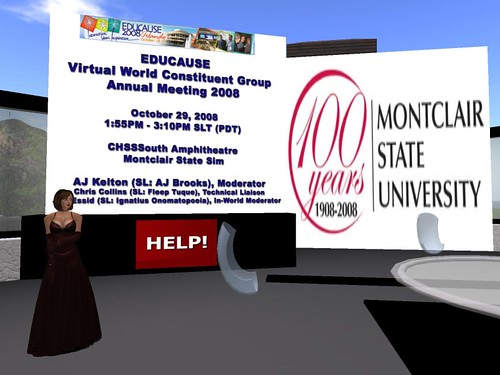
I have the privilege of working with AJ Kelton (SL: AJ Brooks) from Montclair State University and Joe Essid (SL: Ignatius Onomatopoeia) from Richmond University again this year to stream in the EDUCAUSE 2008 Virtual World Constituent Group Annual Meeting into Second Life in a few weeks. How often do you get to work in an evening gown! Looking forward to the conference itself, and the Second Life interaction. Are you coming to EDUCAUSE this year? Leave a comment and let’s meet up!

What: EDUCAUSE 2008 Virtual World Constituent Group
When: Wednesday, October 29th, 2008
Time: 4:55pm to 6:10pm EST (1:55pm to 3:10pm SLT)
Where: Orlando, FL and in Second Life
SLurl: http://slurl.com/secondlife/Montclair%20State%20CHSSSouth/129/158/22

Learning, Libraries, & Technology 2009

Another symptom of the “too busy!” syndrome – I almost missed the opportunity to put in a proposal for the Learning, Libraries, and Technology 2009 conference! Formerly called the Ohio Digital Commons for Education, the new name didn’t ring a bell when I saw the Call for Proposals in my in-box – doh! Thankfully, my good friend Brenda Boyd (SL: Stargazer Blazer) at Miami U gave me a poke with a sharp stick about submitting something – thanks Brenda! This is without a doubt one of the best educational technology conferences I attend all year. Ohio educators especially should go to meet and network with great colleagues, learn about what’s happening in the state, and to get new ideas to bring back to your home institution. In the years that I’ve attended, I don’t think I’ve ever come away from it without learning something new and immediately useful. Will cross my fingers on the proposals!

I’m sure there’s something else I’m forgetting, but that’s it for today’s updates. Hope everyone else is having a great quarter or semester so far, and maybe doing a better job of keeping up with everything than I am!

Reblog this post [with Zemanta]